
The White Temple in Chiang Rai: What You Probably Didn’t Expect to See Here
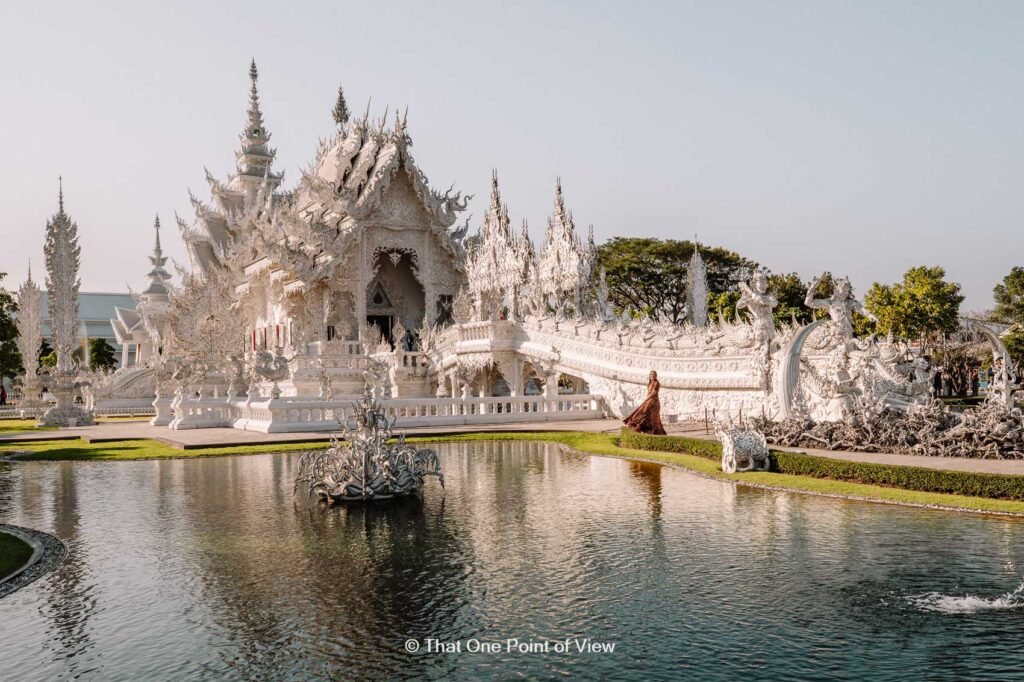
When most people picture temples in Thailand, the image is pretty consistent—golden rooftops glinting in the sun, intricately carved statues of serene Buddhas, incense wafting through the air, and a sense of age-old calm wrapped in tradition. Temples here are sacred, solemn, and deeply tied to history. But tucked away in the northern province of Chiang Rai, there’s one temple that completely defies everything you think you know about Thai religious architecture. It doesn’t shimmer with gold or boast the expected symmetry of ancient design. Instead, it’s startlingly white, almost glowing in the sun, with mirrored mosaics that catch the light in a way that makes the entire structure seem otherworldly—like something pulled from a fantasy novel or a surreal dream rather than a spiritual site.
This is Wat Rong Khun, better known to the world as The White Temple. And it’s not just a place of worship—it’s an ongoing art project, a provocative visual statement, and a deeply symbolic creation by renowned Thai artist Chalermchai Kositpipat. Unlike any other temple in Thailand, the White Temple blends Buddhist philosophy with pop culture, cosmic symbolism, and unsettling imagery. From reaching hands clawing up from the earth to wall murals featuring characters like Neo from The Matrix, Superman, and even Hello Kitty, this temple forces you to see spirituality through a completely different lens.
If your travels are taking you anywhere near Northern Thailand, this temple should be at the very top of your must-see list. But fair warning: nothing about this place is ordinary. While it might look pristine and peaceful from afar, the deeper you step into its shimmering walls, the more you’re confronted by intense messages about life, death, rebirth, and the chaotic modern world. So leave your expectations at the door—because the White Temple is going to surprise you in ways you never imagined.

So, What Exactly Is the White Temple?
The White Temple isn’t ancient or traditional in the classic sense. In fact, it’s relatively new—construction started in 1997, and it’s still ongoing today. This contemporary Buddhist temple is the brainchild of Chalermchai Kositpipat, one of Thailand’s most celebrated artists.
Chalermchai didn’t just restore an old temple—he reinvented it. He envisioned a temple that fused Buddhist symbolism with modern pop culture, politics, and a hefty dose of imagination.
What you get is a one-of-a-kind place that feels like a collision between heaven, hell, and Hollywood.
Unlike traditional Thai temples, which often shimmer with gold and are surrounded by red and green mosaics, the White Temple is… well, white. Pure, blinding white.
But it’s not just the color that sets it apart.
1. The All-White Exterior
The temple is completely covered in white plaster and shards of mirrored glass, which reflect the sunlight and make the whole structure sparkle like it’s made of diamonds. The color symbolizes the purity of the Buddha, while the mirrors represent wisdom and self-reflection.
It’s beautiful, no doubt—but also slightly eerie. And that’s exactly the vibe Chalermchai wanted to create.
One of the first things that strikes you when you lay eyes on Wat Rong Khun is just how bright—almost blindingly bright—it is. Unlike traditional Thai temples, which are often adorned in gold leaf, rich reds, and intricate mosaics, this temple is covered entirely in white plaster and meticulously embedded with thousands of tiny mirrored glass fragments. When the sun hits it just right, the entire structure explodes in a brilliant shimmer, catching the light in every direction and making it appear as if it’s sculpted from crushed diamonds or frozen starlight.
But this isn’t just about aesthetics. The color white was a deliberate choice by the temple’s creator, Chalermchai Kositpipat, and it carries deep symbolic meaning. White, in this context, represents the purity of the Buddha—untainted, compassionate, and beyond the corruption of worldly desire. It’s a stark, bold statement of spiritual idealism. The use of white sets this temple apart not just visually, but philosophically, emphasizing the essence of enlightenment itself: clear, calm, and unmarred.
The mirrored glass, on the other hand, plays a more nuanced role. These reflective shards represent wisdom, but not just the intellectual kind. They symbolize the mirror of self-awareness and introspection—the ability to see one’s true nature. As the light reflects off the glass, it reminds visitors that enlightenment isn’t found in external rituals or appearances, but by turning inward and truly seeing oneself. The mirrors also reflect the viewer and the world around them, making every visit slightly different depending on the time of day, the angle of the sun, and even your own movement through the space. It’s a dynamic interplay between the external world and inner consciousness.
And while the temple’s brilliance is undoubtedly stunning—almost ethereal in its glow—it also carries an eerie, otherworldly quality. There’s something ghostlike about the glistening white figures, the silent guardians, the intense contrast between light and shadow. The entire structure feels suspended in time, like a dream you’ve stepped into but haven’t quite made sense of. And that’s entirely intentional.
Chalermchai designed Wat Rong Khun not just to be admired, but to provoke something deeper—unsettlement, curiosity, contemplation. The temple is beautiful, yes, but not in the soft, comforting sense. Its beauty has edges. It challenges. It stirs something within you that’s hard to name. It feels divine, but also slightly alien, as if you’re standing in a place that straddles the earthly and the spiritual worlds.
This atmosphere of surreal serenity mixed with faint unease is a key part of the experience. Wat Rong Khun isn’t just a temple—it’s a spiritual riddle crafted in glass and plaster. Every sparkle, every reflection, every gleaming surface asks the same silent question: Are you seeing clearly? Not just the temple—but yourself.
2. The Bridge of the Cycle of Rebirth
To enter the main temple, you have to cross a narrow bridge over a sea of desperate, reaching hands—literally. The sculpture represents unrestrained desire and human suffering. It’s a graphic reminder that to reach heaven, you first have to overcome hell.
Many visitors pause here, not just for photos but because it’s genuinely unsettling. This is the start of a theme you’ll see throughout the temple: life, death, and rebirth told through shocking visuals.
To reach the main hall of the White Temple, you first have to cross a narrow, gleaming white bridge that stretches over a pit of outstretched, writhing hands—and they’re not just abstract art. These eerie sculptures represent souls trapped in desire, pain, and suffering. Each hand seems to grasp desperately toward you, some even holding skulls or pleading in agony, as if trying to pull you down into the chaos below. It’s a powerful, visceral metaphor—this field of torment is meant to represent unrestrained human desire and the suffering it brings. And to get to the serenity of the temple’s inner sanctum, you must quite literally walk past and rise above it.
Many visitors find themselves stopping right here—not just to snap a photo, though it’s certainly one of the most photographed parts of the site—but to take in the scene’s emotional intensity. It’s not just creepy; it’s deeply symbolic. This chilling passage sets the tone for the entire experience at Wat Rong Khun. Throughout the temple, you’ll encounter similar themes—life and death, heaven and hell, karma, rebirth, and the eternal struggle between good and evil. These aren’t presented in subtle, traditional motifs either—they’re depicted in bold, sometimes shocking, modern visuals that make you pause and reflect.
From the very first step, the message is clear: to reach enlightenment, to find peace, you must first confront the darker sides of human nature. And that journey starts with crossing a bridge over hell itself.
3. Pop Culture Cameos
As you step inside the main hall (called the ubosot), you’ll notice something that seems… off. The murals on the walls aren’t your typical Buddhist scenes.
Instead, you’ll see:
- Superman
- Batman
- Neo from The Matrix
- Freddy Krueger
- Hello Kitty
- Michael Jackson
- Even the Twin Towers during 9/11
Yes, you read that right.
These pop culture figures are all woven into surreal scenes of chaos and destruction, symbolizing the corruption of humanity, the struggles of the modern world, and the path toward enlightenment.
It’s confusing, bold, and absolutely unforgettable.
Why Does It Look Like This?
You might be wondering why a temple—especially a Buddhist one—would feature such bizarre imagery.
According to Chalermchai, his goal was to create a space where spiritual teachings could be interpreted through the lens of modern struggles. He wanted visitors to confront the realities of the world—war, greed, temptation, technology—and understand how Buddhist principles still apply today.
In his own words, “I want to express the beauty of Buddhist teachings through contemporary art.”
Don’t Miss These Other Features
1. The Golden Building
Directly opposite the white temple is a bright gold structure that contrasts sharply with everything else. This is the restroom building—yes, the toilets. The gold represents the focus society places on material things and superficial beauty. Ironically, it’s more traditional-looking than the temple itself.
Directly across from the gleaming white main temple is a dazzling, gold-plated structure that feels almost out of place—until you understand its purpose and symbolism. This isn’t a shrine or meditation hall. It’s the restroom building. Yes, really. And the contrast between the ornate, glimmering gold and the stark, spiritual white of the main temple isn’t accidental—it’s deeply intentional.
The golden restroom stands as a bold, ironic statement about the materialism that dominates modern society. Gold, in this context, doesn’t symbolize purity or spiritual richness. Instead, it represents the obsession with wealth, vanity, and external beauty—those things that often distract people from deeper truths. It’s an intentional visual contradiction: the most traditionally beautiful and luxurious-looking building on the grounds is actually just… the toilet.
And in a twist that surprises many, this restroom is built in a more conventional Thai architectural style than the avant-garde White Temple itself. Ornate rooftops, gleaming surfaces, intricate details—it’s designed to reflect the traditional temples that tourists typically expect. That irony hits even harder when you realize it’s not meant for worship, but rather for practical bodily needs.
The golden toilet building is artist Chalermchai Kositpipat’s way of asking visitors to reflect: Why do we value the shiny and the superficial so highly, even when it serves the most basic of functions? It’s a subtle dig at societal values and an invitation to look beyond appearances.
If you look closely near the temple grounds, you might spot something strange—and oddly familiar—emerging from the earth. It’s none other than the Predator, the terrifying alien from the Hollywood film franchise, half-buried and clawing its way out of the temple grounds. And no, this isn’t a prank or a misplaced movie prop. It’s entirely intentional and part of the temple’s modern storytelling approach.
Artist Chalermchai Kositpipat blends pop culture with religious symbolism to startling effect, and the Predator is a perfect example. This monstrous creature, known for its violence and primal instincts, represents the darker sides of humanity—the internal “monsters” we all harbor: anger, greed, violence, desire, and fear. By placing a sci-fi villain in a sacred space, Kositpipat draws a powerful connection between fiction and reality, showing that evil isn’t just something out there in movies; it lives within us all.
The sight of the Predator clawing its way toward the surface serves as a reminder that these internal battles are ongoing. We are constantly facing choices between light and darkness, between our higher selves and our baser instincts. And while it may seem strange to include such a modern, even comical, figure in a religious site, this juxtaposition is exactly what makes Wat Rong Khun so unique—it doesn’t shy away from using bold imagery to drive spiritual messages home.
The Predator sculpture, along with other pop culture references around the temple (like Superman, Neo from The Matrix, or even Michael Jackson), is not there just for shock value or tourist gimmicks. It’s part of a broader theme: blending contemporary culture with timeless truths. This integration makes the temple not just a place of worship, but also a place of reflection—one that speaks to all generations, not just traditional devotees.
2. The Predator Emerging from the Ground
No, you’re not imagining things. There’s literally a sculpture of the Predator character from the sci-fi movies bursting out of the earth near the bridge. It symbolizes evil forces hiding beneath the surface, waiting to consume the unwary.
As you explore the grounds of Wat Rong Khun, also known as the White Temple, it doesn’t take long to realize this place is anything but ordinary. Just when you think you’ve absorbed the surreal beauty and symbolic serenity of the shimmering white structure, something strange and startling catches your eye—something that looks suspiciously like it stepped straight out of a sci-fi film.
And you’re not wrong.
Near the bridge that leads to the main temple, a terrifying figure appears to be bursting out of the earth itself—clawed hands extended, dreadlocks frozen mid-motion, jaw agape in a monstrous scream. It’s the Predator, the infamous alien from the Hollywood film series. And no, it’s not a prank or a misplaced movie prop. This is a deliberate piece of the temple’s design, installed by the artist himself, Chalermchai Kositpipat.
So what is a murderous alien doing on the sacred grounds of a Buddhist temple?
Like so much of Wat Rong Khun’s unconventional imagery, this unexpected sculpture is layered with meaning. The Predator isn’t just here for shock value or to amuse pop culture fans. It’s a potent symbol of the darkness that lurks just beneath the surface of human consciousness. This monstrous figure represents the forces of evil, violence, and desire—the primal instincts and destructive behaviors that can erupt if we’re not vigilant. Buried halfway in the ground, it’s as if the Predator is crawling out from some hidden pit of the subconscious, ready to consume the unwary soul that strays from the path of mindfulness.
Its position near the entrance is no accident. To enter the temple and move toward enlightenment, you must first confront the symbolic underworld—the chaos, suffering, and temptation that lie below. This chilling figure is a stark reminder: Evil isn’t just out there in stories and myths. It lives within all of us. And if we’re not careful, it can take hold.
But there’s also something clever happening here. By incorporating a recognizable pop culture figure into a sacred space, Chalermchai is breaking down the divide between spiritual teachings and modern storytelling. He’s using a visual language that transcends religion or nationality. You may not know much about Buddhist cosmology, but you probably know what the Predator represents—violence, danger, fear, the hunter within. That shared cultural reference becomes a gateway to deeper reflection.
It also plays into the temple’s broader theme: the journey from ignorance to awareness, from illusion to truth. The Predator isn’t just some scary alien—it’s symbolic of the internal monsters we all battle. To move forward on the spiritual path, we first have to recognize those shadows—and learn not to be ruled by them.
So while it might seem absurd or out of place at first glance, the Predator sculpture is actually one of the most thought-provoking elements in the entire complex. It forces you to ask yourself: What’s lurking beneath your own surface? What inner demons must you face before you can move toward peace?
At Wat Rong Khun, even a sci-fi monster becomes a spiritual lesson.
3. Skulls and Severed Heads Hanging from Trees

Walk around the grounds and you’ll spot ghoulish decorations, including skulls, skeletons, and heads hanging from trees—some of them cartoonish, others terrifying. It’s all part of the narrative of karma, consequence, and the cycle of life and death.
As you wander the grounds of Wat Rong Khun, don’t be surprised if you find yourself surrounded by imagery that feels more haunted house than holy sanctuary. Look closely—hanging from the trees are dozens of disembodied heads, suspended by ropes or vines, their expressions twisted in agony, fear, or eerie glee. Some are grotesquely realistic, resembling tortured souls mid-scream. Others are more exaggerated or cartoonish—think pop culture villains, demonic clowns, or surreal hybrid creatures with bulging eyes and fanged mouths.
Scattered around the garden paths, you’ll find skeletal figures crawling out of the earth, skulls peeking from beneath twisted roots, and ghostly sculptures in various stages of decay. These ghoulish decorations might feel jarring at first, especially set against the serene, almost celestial white glow of the main temple. But they’re not here by accident—and they’re definitely not just for dramatic effect.
Everything in this chilling visual landscape is intentional, woven into a much larger story: one about karma, consequence, and the inevitable cycle of birth, death, and rebirth. According to Buddhist philosophy, our actions—both good and bad—have consequences, in this life and the next. The more you allow greed, anger, lust, or ignorance to guide your behavior, the more suffering you create—not only for others, but for yourself. These disturbing sculptures serve as visceral representations of that suffering.
This is what happens when karma catches up with you.
The hanging heads can be seen as souls trapped in lower realms—perhaps condemned by their own misdeeds, unable to move on. The skeletal figures crawling from the earth might represent rebirths shaped by unresolved pain or attachments. Even the exaggerated or humorous faces aren’t just for fun; they hint at the absurdity of our worldly obsessions and how easily we lose ourselves in illusions of ego, fame, or vanity.
There’s a raw honesty to these displays. Where most temples lean toward calm, balance, and peace, Wat Rong Khun doesn’t shy away from the darker side of the spiritual journey. It forces you to confront the uncomfortable truth that transformation and awakening often begin in the places we least want to look—in suffering, in fear, in the consequences of our own choices.
But the message isn’t all doom and gloom. These chilling images are not the destination—they’re the starting point. They’re the symbolic “hell” you must pass through on your way to the enlightened state represented by the radiant white temple. It’s a journey from darkness to light, from ignorance to awareness, from death to spiritual rebirth.
So take your time as you explore this part of the temple grounds. It’s easy to overlook these grotesque details or rush past them, but that’s the point—these haunting visuals are designed to make you pause, reflect, and recognize the shadows within yourself. Only by acknowledging those shadows can you truly begin to rise above them.
At Wat Rong Khun, even the macabre serves a purpose—and every skull, skeleton, and dangling head is part of a greater story about what it means to be human, and what it takes to transcend.
4. Art Gallery and Museum

Behind the temple is an art gallery showcasing Chalermchai’s paintings, sketches, and sculpture work. His style blends Buddhist themes with political commentary, surrealism, and satire. It’s a powerful extension of what you see in the temple and gives you deeper insight into the mind behind the masterpiece.
Just beyond the dazzling white structure of Wat Rong Khun lies another hidden gem that many visitors overlook—a spacious and thoughtfully curated art gallery dedicated to the visionary behind the temple, Chalermchai Kositpipat. If the temple itself feels like stepping into a surreal dreamscape, then this gallery is your chance to step directly into the artist’s mind. And what you’ll find is just as bold, strange, and thought-provoking as the temple itself—if not more so.
Inside, the gallery showcases an impressive collection of Chalermchai’s original works, ranging from large-scale, vividly colored paintings to intricate ink sketches, political murals, mixed-media pieces, and provocative sculptures. His artistic style is instantly recognizable: a dramatic fusion of traditional Thai Buddhist iconography with modern symbolism, surrealist imagery, and biting social commentary. It’s a visual language that feels both ancient and radical—filled with mythical beings, celestial deities, sacred geometry, and, in the very next frame, world leaders, media icons, or scenes of environmental destruction.
Chalermchai doesn’t shy away from controversial themes. Many of his works explore issues like corruption, consumerism, war, and the erosion of spiritual values in an increasingly materialistic world. He uses art as a tool for both meditation and confrontation—inviting viewers to reflect deeply, even uncomfortably, on the world around them. And yet, despite the heavy themes, his works are laced with satire, humor, and sometimes absurdity. This balance of the sacred and the profane, the serious and the playful, is what makes his vision so unique.
What you see inside the White Temple is only the surface—an architectural expression of his beliefs and worldview. But in the gallery, you see the full spectrum of his thought process—his sketches, his revisions, his evolution as an artist and a thinker. Some pieces are intensely personal, while others feel like a mirror held up to society. All of it is bold, unapologetic, and deeply symbolic.
There are recurring motifs throughout his work: the eternal battle between good and evil, the pursuit of spiritual awakening, the consequences of greed and ignorance, and the potential for transcendence. These themes mirror those seen throughout the temple, but in the gallery, they’re explored in a more direct, unfiltered way. It’s a space where Chalermchai speaks freely, not just through architecture, but through every brushstroke, every line, every sculpted form.
For art lovers, spiritual seekers, or anyone intrigued by the intersection of creativity and philosophy, this gallery offers an invaluable window into what makes Wat Rong Khun so much more than just a pretty building. It reveals the depth of the artist’s conviction—that art can awaken consciousness, challenge belief, and inspire change.
So if you visit the White Temple, don’t leave without stepping into this extraordinary gallery space. It’s not just an add-on—it’s a vital part of the entire experience. It helps you understand not only the symbolism of the temple itself, but also the fearless imagination and uncompromising vision of the man who created it.
How to Visit the White Temple
Visiting the White Temple is easy, whether you’re based in Chiang Rai or coming from Chiang Mai.
Opening Hours:
- 8:00 AM – 5:00 PM
- Best time to visit: early morning or late afternoon to avoid the crowds and harsh sunlight.
Entrance Fee:
- 100 THB (approx. $3 USD) for foreigners.
- Thai nationals can enter for free.
How to Get There:
- From Chiang Rai city, it’s a 20-minute drive or taxi ride.
- From Chiang Mai, it’s a 3 to 4-hour bus or car journey.
Plenty of tours also include the White Temple as part of a Chiang Rai day trip.
Dress Code:
Even though it’s a modern temple, respectful attire is a must:
- Shoulders and knees should be covered.
- No revealing clothing or beachwear.
- Shoes must be removed before entering the main hall.
Pro Tips for Your Visit
- Go early to beat the tour buses and get great photos without the crowd.
- Bring sunglasses—the mirrored glass makes the temple almost blinding under the sun.
- Don’t rush—there’s a lot of detail and symbolism to take in.
- Spend time in the art gallery—it offers context that deepens your appreciation.
- Visit nearby attractions like the Blue Temple and Black House for a full-day cultural tour.
Is It Still a Temple If It’s This Unconventional?
That’s the big question many people ask.
Yes, the White Temple is still a functioning Buddhist temple—monks visit, prayers are held, and spiritual messages are everywhere if you look closely enough.
But it’s also a living art installation, constantly evolving with new sculptures, murals, and designs. Chalermchai plans to continue building and expanding the temple until at least 2070. It’s a lifetime project, meant to inspire not just Thais but the whole world.
What You Probably Didn’t Expect to See Here
Let’s be honest—when you think “temple,” you probably don’t expect to see:
- Superman and Hello Kitty
- Skeletal arms reaching from the underworld
- Sci-fi monsters and surreal murals
- Commentary on terrorism and environmental destruction
But that’s exactly what makes the White Temple worth visiting.
It’s not just a place of prayer—it’s a place that makes you think, challenges your perceptions, and pushes the boundaries of what religious art can be.
Here is a clean Table version of your Table of Contents for the White Temple in Chiang Rai, formatted for easy reference:
Table of Contents: The White Temple in Chiang Rai
| Section | Subsections |
|---|---|
| The White Temple in Chiang Rai | What You Probably Didn’t Expect to See Here |
| So, What Exactly Is the White Temple? | — |
| What Makes It So Unique? | 1. The All-White Exterior 2. The Bridge of the Cycle of Rebirth 3. Pop Culture Cameos |
| Why Does It Look Like This? | — |
| Don’t Miss These Other Features | 1. The Golden Building 2. The Predator Emerging from the Ground 3. Skulls and Severed Heads Hanging from Trees 4. Art Gallery and Museum |
| How to Visit the White Temple | • Opening Hours • Entrance Fee • How to Get There • Dress Code |
| Pro Tips for Your Visit | — |
| Is It Still a Temple If It’s This Unconventional? | — |
| What You Probably Didn’t Expect to See Here | — |
| FAQs About the White Temple in Chiang Rai | • Is the White Temple real or just an art project? • Can you go inside the White Temple? • How long does a visit take? • Is it appropriate to visit as a tourist? • What other attractions are nearby? |
| Final Thoughts | Why You Shouldn’t Miss It |
FAQs About the White Temple in Chiang Rai
Is the White Temple real or just an art project?
It’s both. It’s a fully functional Buddhist temple, but it was also designed as a massive work of contemporary art by Chalermchai Kositpipat.
Can you go inside the White Temple?
Yes, visitors are allowed inside the main hall. Photography isn’t permitted inside, out of respect for the sacred space.
How long does a visit take?
Most visitors spend 1–2 hours, but if you’re into art or photography, you might want to stay longer.
Is it appropriate to visit as a tourist?
Absolutely. It’s one of the most popular attractions in Chiang Rai and welcomes visitors from all backgrounds, as long as they dress respectfully.
What other attractions are nearby?
- Blue Temple (Wat Rong Suea Ten)
- Black House (Baan Dam Museum)
- Singha Park
- Karen Long Neck Village
Final Thoughts: Why You Shouldn’t Miss It
The White Temple isn’t just a photo op. It’s a deep, layered experience that fuses spirituality with social commentary, Buddhism with pop culture, and tradition with rebellion.
If you’re the kind of traveler who loves seeing things you won’t find anywhere else in the world, then this is your spot. The White Temple isn’t just another attraction—it’s an emotional, artistic, and cultural journey.
Expect the unexpected. And let yourself be surprised.
Let me know if you’d like this in a downloadable format (PDF, Word, etc.) or if you need similar rewrites for other Thai landmarks!